AI adoption and change management, the human way

AI doesn't change a company. Curious people do.

I help teams get past "make this email sound nicer" and into the good stuff: the odd experiments, the better questions, the moment someone leans back and says wait, it can do that? And I help leaders build the kind of culture where that happens on purpose.

Why "Warm Start"?

Nobody starts from zero.

In machine learning, a warm start means a model doesn't learn from scratch. It begins with what it already knows and builds from there.

That's how I think about people and AI. Your team already has skills, judgment and instincts worth keeping. We start there, and let AI build on top.

Sound familiar?

Here's how most AI rollouts go.

Act one

The licence arrives with fanfare.

Then everyone uses it to soften the tone of their emails, and the work looks exactly like it did last year.

Act two

A few people sprint off and build wizardry.

Everyone else feels too far behind to ask a basic question, so they stop asking.

Act three

Leadership sets a usage target.

Curiosity, it turns out, has never once responded to a target.

How it works

Most companies plan a launch. I help you run a change.

Rethink

Start with the work, not the tool.

Experiment

Try things, together.

Integrate

Keep what works.

Multiply

Pass it on.

and round again
Change management, built into every step. CCMP expected December 2026.

The part nobody puts in the rollout plan

"If AI can do this, what am I for?"

Picture the person who has spent ten years being the best writer on the team, or the one who can untangle any spreadsheet. Then a tool shows up that drafts in seconds. For them it isn't a productivity upgrade. It's a question about who they are at work.

What gets labelled resistance is often closer to grief, and no training session reaches it. So I build room for it into every program.

Say it out loud

Leaders name the worry before anyone has to whisper it, so it becomes something the team works through together.

Find what's theirs

We map where each person's judgment, taste and relationships matter more now, not less.

Redraw the role together

People help shape how their job grows with AI, instead of finding out in an all-hands.

What I do

Wherever your people are starting from

Pick one, or mix them into a full program. They're designed to stack.

Start here

AI 101

For people who've never opened ChatGPT, and the ones who opened it once and closed it again. Friendly, jargon-free, and no question is too basic.

  • What AI is good at, and where it bluffs
  • Using it safely within your company's rules
  • A first small win before the session ends
For teams

AI, but for your actual job

Hands-on workshops built around your team's real documents, meetings and stubborn bottlenecks. People leave with things they'll use on Monday.

  • Practical sessions for non-technical teams
  • Workbooks shaped to each function
  • From one-off tricks to everyday workflows
For leaders

Leading a curious culture

Working sessions and advisory for leaders who'd rather have a team that experiments than a dashboard that says "adoption: 74%."

  • How to go first, visibly
  • Making it safe to try and fail
  • What to measure, and what to stop measuring altogether
The whole show

Your own AI Innovation Series

The full program, designed and run the way I did it at Qualtrics. Part festival, part change plan.

  • Change strategy and a plan for your leaders
  • Communications that make people want in
  • Run-of-show, facilitator guides and workbooks

Where this comes from

We called it the ah-ha moment.

At Qualtrics, I designed the AI Innovation Series on a hunch: people don't change how they work because a new button appears in their sidebar. They change when they get to poke at something in front of their colleagues and watch it do something nobody expected.

So it wasn't a training course. It was closer to a festival, with sessions, show-and-tells and a communications plan built to make people want to be in the room. I wrote the facilitator guides, the run-of-show and the workbooks, and I ran it for two years.

We didn't count attendance. We watched what people brought to the tool: sharper questions, richer context, real problems instead of "write me a poem about Mondays." The team started calling that shift the ah-ha moment. Helping other companies find theirs is the whole point of this.

Read the case study (PDF)
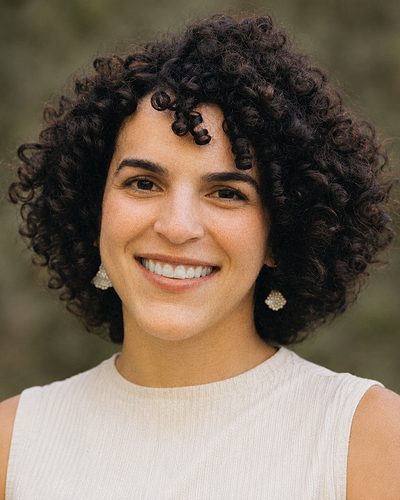
Kanzi Kamel, smiling, with curly dark hair

Who you'd be working with

Hi, I'm Kanzi.

I've always been more curious about people than about tools. Journalism taught me to listen for what someone means, not just what they say. Then, over eight years at Qualtrics, I got to sit alongside teams through all kinds of change: new offices, acquisitions, an IPO, and finally AI. Each time, I found myself asking the same question: what helps a person feel ready for something new?

I took that question into my Executive Master in Energy at BI Norwegian Business School, and into interviews with 21 leaders in SaaS and energy about how they're bringing AI in. Again and again, they told me the same thing: AI stalls on people, not technology. That's exactly where I like to work, and I'd love to learn from your team too.

CCMP expected Dec 2026 8 years at Qualtrics Executive Master in Energy, BI Salt Lake City, working remotely
A good fit if your company has AI tools, curious people, and no plan yet to introduce them properly.

SaaS and tech companies Energy and climate organizations People, ops, comms and marketing teams Leaders rolling out AI company-wide
Working in energy? Field notes Can AI and the green transition co-exist? What energy and tech leaders told me, and what running an AI program for 1,400 people taught me. Read the article

Let's have a curious conversation.

Thirty minutes, no slides. Tell me where your team is with AI, and I'll tell you what I'd try first, whether or not we end up working together.

Book a call or write to kanziykamel@gmail.com